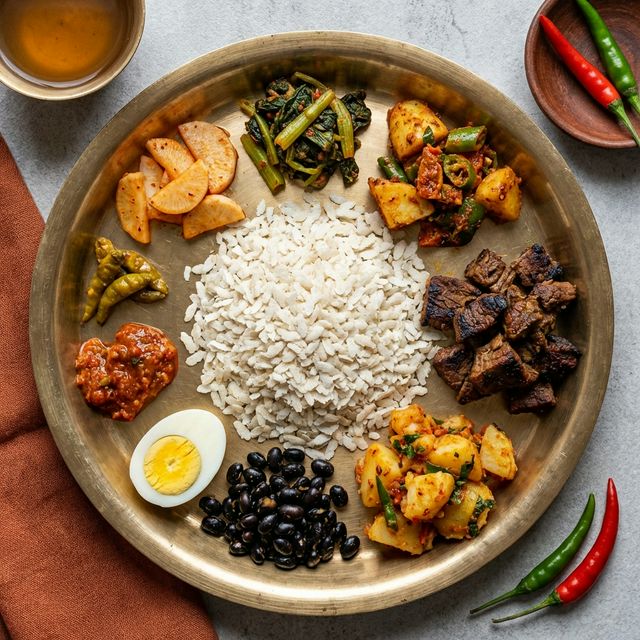
A Newari feast, or “Bhoj,” is more than just a meal – it’s a cultural experience that brings together family, friends, and community in a celebration of food, tradition, and togetherness.
What is a Newari Feast?
A traditional Newari feast is an elaborate multi-course meal that showcases the diversity and richness of Newari cuisine. These feasts are typically held during:
- Weddings and celebrations
- Religious festivals
- Important family gatherings
- Cultural ceremonies
The Setting
Newari feasts are traditionally served on:
- Tapari (leaf plates made from sal leaves)
- Brass or copper plates for special occasions
- Guests sit on the floor in rows, creating a sense of community
- Food is served in a specific order, each dish complementing the next
The Feast Experience
First Course: Appetizers
The feast typically begins with:
- Bara (lentil pancakes)
- Wo (lentil cakes)
- Chatamari (rice crepes)
- Various achar (pickles and chutneys)
Main Courses
The heart of the feast includes:
- Beaten rice (Chiura) as the base
- Buffalo meat prepared in various styles
- Chicken curry
- Boiled eggs
- Black soybeans (Bhatmas)
- Spicy potato salad (Aloo Achar)
- Bamboo shoots
- Dried fish
Accompaniments
No Newari feast is complete without:
- Multiple types of pickles
- Spicy chutneys
- Fresh vegetables
- Traditional condiments
Sweet Endings
The feast concludes with:
- Yomari (sweet dumplings)
- Lakhamari (traditional sweet bread)
- Juju Dhau (king yogurt from Bhaktapur)
The Social Aspect
What makes a Newari feast truly special is the social experience:
- Community Bonding: Everyone eats together, regardless of social status
- Conversation: The meal is a time for sharing stories and strengthening relationships
- Tradition: Each dish carries cultural significance and history
- Hospitality: Hosts take great pride in serving abundant, delicious food
My Personal Experience
Having grown up in Lalitpur, I’ve attended countless Newari feasts. Each one is memorable in its own way. The sounds of people chatting, the aroma of spices, the sight of colorful dishes arranged on plates – it’s a feast for all senses.
What always strikes me is the generosity of the hosts. In Newari culture, it’s considered important to serve guests abundantly. You’ll often hear hosts encouraging guests to eat more, and it’s not uncommon to be served multiple helpings!
Etiquette and Customs
If you’re invited to a Newari feast:
- Arrive on time – feasts usually start at a specific hour
- Wash your hands before eating (traditionally, Newari food is eaten with hands)
- Don’t refuse food – it’s considered polite to accept what’s offered
- Pace yourself – there are many courses!
- Show appreciation – compliment the food and thank the hosts
The Cultural Significance
Newari feasts are important because they:
- Preserve culinary traditions passed down through generations
- Strengthen community bonds
- Mark important life events
- Showcase Newari hospitality and culture
For Visitors
If you’re visiting Nepal and want to experience a Newari feast:
- Look for restaurants in Patan that offer traditional Newari set meals
- Time your visit with festivals like Indra Jatra or Dashain
- Ask local guides (like me!) about authentic feast experiences
- Be prepared for bold flavors and generous portions
Conclusion
A Newari feast is one of the best ways to understand Newari culture. Through food, you experience the community’s values of generosity, tradition, and togetherness. It’s not just about eating – it’s about being part of a cultural tradition that has been celebrated for centuries.
If you ever have the opportunity to attend a traditional Newari feast, don’t hesitate. It will be an experience you’ll remember long after the meal is over!